Build & Test Securely
We embed SAST, DAST, and SCA scanners directly into your IDE, build system, and CI pipeline so vulnerabilities are caught at the earliest — and cheapest — point in the software delivery lifecycle.
End-to-End Secure Build & Test Services
From IDE plugins to production-ready build pipelines — we integrate security tooling at every coding and testing phase to catch vulnerabilities before they become incidents.
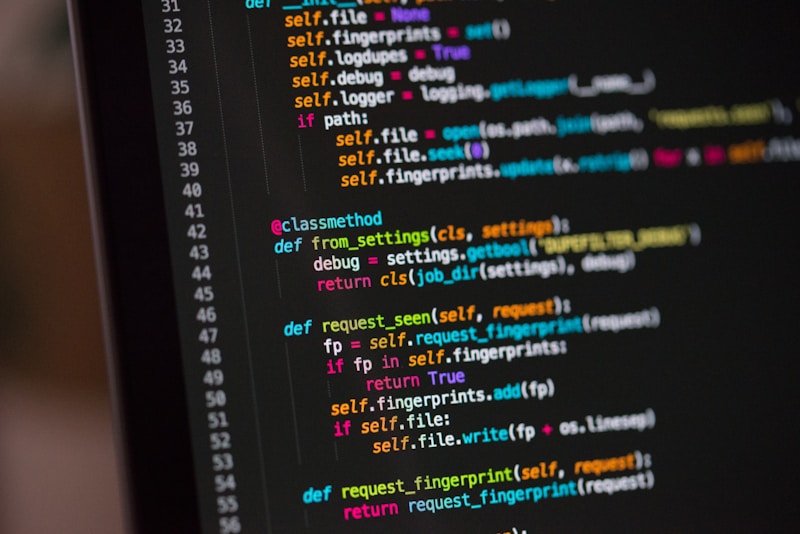
Secure Coding Standards
Establish and enforce language-specific secure coding guidelines, IDE linting rules, and pre-commit hooks that prevent insecure patterns from ever entering version control.

Static Application Security Testing (SAST)
Automated static analysis of your source code on every commit — identifying injection flaws, insecure configurations, and logic vulnerabilities before the build even completes.

Dynamic Application Security Testing (DAST)
Simulate real-world attacks against a running application in staging — detecting runtime vulnerabilities such as XSS, SQL injection, and authentication bypasses that static analysis cannot see.

Software Composition Analysis (SCA)
Continuously audit open-source libraries and third-party dependencies for known CVEs, outdated packages, and licence compliance issues — blocking risky dependencies from entering your build artefact.

Automated Testing Suites
Design and implement comprehensive unit, integration, contract, and end-to-end test suites that run automatically on every commit — providing rapid, reliable feedback with full test coverage reporting.
Quality Gates & Code Review
Enforce automated quality gates — code coverage thresholds, security findings limits, and complexity budgets — that block insecure or low-quality code from progressing to the next pipeline stage.
The RND Softech Secure Build Advantage
We don't bolt security on after the fact — we embed it into the IDE, the build system, and the test harness so every artefact is proven secure before it moves forward.
Shift-Left Security
Security checks start at the developer's local IDE — catching vulnerabilities at the moment they are introduced, making them exponentially cheaper to fix.
Sub-5-Minute Feedback
Parallelised SAST, SCA, and unit-test stages deliver actionable security and quality feedback in under five minutes — keeping developer flow uninterrupted.
Full Coverage
SAST, DAST, SCA, and automated functional tests work together to provide comprehensive code, runtime, and dependency coverage in a single pipeline run.
Audit-Ready Reports
Every build produces signed, tamper-evident security reports — artefact SBOMs, test result archives, and compliance dashboards ready for auditors on demand.
How We Secure the Build Loop
A repeatable, automated cycle that takes raw code through security analysis, quality validation, and verified artefact generation — every single commit.
Write & Commit
IDE plugins and pre-commit hooks flag insecure patterns before code even leaves the developer's machine.
Build & Scan
Automated SAST and SCA scans run in parallel with the build — failing fast on critical findings before any test suite begins.
Test & Validate
Unit, integration, and DAST tests validate both functionality and runtime security — generating coverage and vulnerability reports.
Gate & Promote
Quality gates enforce coverage, security, and complexity thresholds — only artefacts that meet all criteria advance to the deployment stage.
Frequently Asked Questions
Everything you need to know about our Secure Coding, Building & Testing services. Can't find your answer? Talk directly with our specialists.
Static Application Security Testing (SAST) analyses source code, bytecode, or binary without executing the application — identifying injection flaws, insecure API usage, hard-coded credentials, and logic errors at the earliest point in the SDLC. Catching a vulnerability at the coding stage is up to 100× cheaper than fixing it post-production.
Dynamic Application Security Testing (DAST) tests a running application by simulating real-world attacker behaviour — probing for XSS, SQL injection, authentication bypass, and misconfiguration. Unlike SAST (which analyses code), DAST sees the application from the outside, catching runtime and environment-specific vulnerabilities that static analysis misses.
Software Composition Analysis (SCA) audits every open-source library your application depends on — mapping each to known CVEs, licence obligations, and end-of-life status. Modern applications are 70–90% open-source code; a single vulnerable dependency (like Log4Shell) can compromise the entire stack. SCA ensures your supply chain is as secure as your own code.
Pre-commit hooks run automated checks — secret detection, linting, and lightweight SAST rules — on a developer's local machine before code is committed to version control. They prevent insecure code from ever reaching the shared repository, dramatically reducing the volume of findings that downstream pipeline stages need to process.
We integrate industry-proven tools tailored to your stack: SonarQube and Semgrep for SAST; OWASP ZAP and Burp Suite Enterprise for DAST; Snyk, OWASP Dependency-Check, and Dependabot for SCA; JUnit, pytest, and Cypress for automated testing; and SonarQube quality gates for enforcement. Tool selection is always aligned to your language, framework, and compliance requirements.
Quality gates are automated pass/fail checkpoints in your CI pipeline that evaluate metrics such as code coverage percentage, number of critical security findings, cyclomatic complexity, and test failure rate. A build that fails a quality gate is blocked from advancing — notifying the developer immediately with a clear remediation path.
Yes. We configure SAST, DAST, and SCA tooling for all major languages and frameworks — Java, Python, JavaScript/TypeScript, PHP, .NET, Go, Ruby, and more. Tool selection and rule sets are customised per language to minimise false positives and maximise detection accuracy.
We tune scanner rule sets during an initial baselining phase — suppressing known false positives, adjusting severity thresholds, and creating custom exclusion profiles. Ongoing review of new findings ensures the signal-to-noise ratio stays high, so developers focus on genuine issues rather than scanner noise.
A Software Bill of Materials (SBOM) is a machine-readable inventory of every component — libraries, dependencies, and transitive packages — included in a software release. Regulators (including US Executive Order 14028) and enterprise procurement teams increasingly require SBOMs. We automate SBOM generation (CycloneDX / SPDX) as part of every build artefact.
We integrate with any modern CI/CD platform — Jenkins, GitHub Actions, GitLab CI, Azure DevOps, Bitbucket Pipelines, CircleCI, and TeamCity. Security and testing stages are added as pipeline-as-code steps (YAML / Groovy), version-controlled alongside your application, and fully reviewable by your team.
Done correctly, it actually speeds development up. Catching vulnerabilities at commit time is far faster than security review cycles at the end of a sprint. We parallelise scanning stages and optimise scan times so that total pipeline duration increases by at most a few minutes — while eliminating costly late-stage rework.
We recommend a minimum of 80% line and branch coverage for business-critical code paths, enforced by quality gates. We work with your team to prioritise coverage improvements on the highest-risk modules first — balancing test investment against deployment confidence and regulatory requirements.
Yes. Our engagement goes beyond tooling — we provide triage support, developer training on secure coding patterns, and hands-on remediation guidance. For critical findings, our security engineers work directly with your development team to implement and verify fixes before the next build cycle.
Every pipeline run produces signed, timestamped reports that map directly to control requirements in PCI DSS, HIPAA, ISO 27001, SOC 2, and NIST frameworks. Automated evidence collection eliminates manual audit preparation and provides auditors with an always-current view of your security posture.
We begin with a pipeline and codebase assessment to understand your current tooling, language stack, and risk profile. Within the first sprint we deliver a baseline scan, recommended tool configuration, and a prioritised remediation backlog. Subsequent sprints progressively harden the pipeline until all quality and security gates are fully automated and enforced.
Ready to Secure Your Build Pipeline?
Let our specialists embed SAST, DAST, SCA, and automated testing directly into your CI pipeline — delivering faster, safer software from the very first commit.
Our Certifications
RND Softech maintains the highest standards of security, quality, and compliance with globally recognized certifications across all operations.
Have a Project in Mind? Let's Talk
Use our contact form for all information requests or contact us directly. All information is treated with complete confidentiality.

.webp)
Talk to Our Experts
Schedule your free consultation
More Than 250+ Clients Worldwide Work With Us
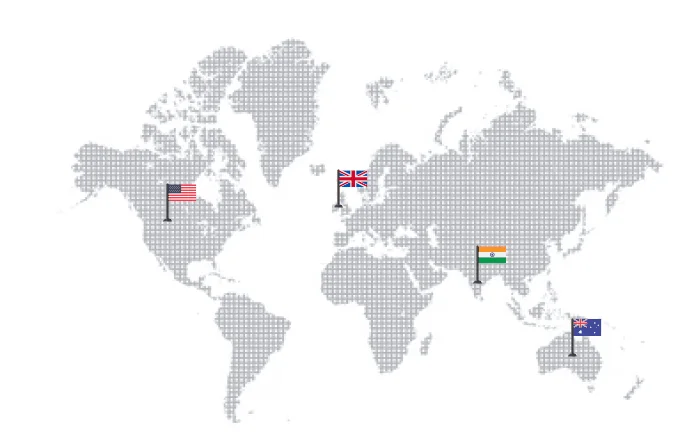
With a presence across 4 continents, we deliver exceptional back-office staffing solutions to businesses in USA, UK, Canada, and Australia.